Unfair Divorce Settlement UK: Is It Actually Unfair, or Does It Just Feel That Way?
Sep 08, 2026
"This isn't fair" is one of the most honest things a man says during divorce, and it's true far more often than it isn't. But it means two very different things depending on why you're saying it, and telling those two things apart matters more than almost anything else at this stage.
When It's Genuinely Unfair
Some situations are real red flags, not just hard feelings. Assets or income not fully disclosed. A settlement that ignores a factor a court would clearly weigh, your contribution, your needs, your earning capacity. Being pressured to agree to something quickly, before you've had proper legal advice or a full picture of the finances. If any of that describes your situation, get a solicitor's eyes on it specifically, not a general sense that something's off.
Our post on what a fair divorce settlement actually looks like covers the factors a genuinely fair outcome accounts for, which gives you something concrete to check an offer against.
When It Feels Unfair But Isn't
The other version is just as real, and much more common. An outcome can feel deeply unfair, and still be exactly what a court would decide, because the emotional weight of losing something and the legal fairness of an outcome are two completely different measures.
When you're in the middle of it, your nervous system is running a threat response. Cortisol up, the part of your brain responsible for weighing things calmly working at reduced capacity. That state reads almost any loss as an injustice, because it's built to protect you, not to negotiate fairly. Recognising that you're in that state doesn't mean the feeling isn't real. It means the feeling isn't reliable evidence on its own.
What to Actually Do If You Think It's Unfair
Don't sign or agree to anything the day it lands, whatever it is. Give it 24 hours minimum before responding to anything significant. Get the specific factors from our post on what you're actually owed in a UK divorce, and check the offer against those, not against how it feels on the day you read it.
If, once you've done that, it still looks genuinely unfair against the actual factors, that's exactly what your solicitor is for. Bring them the specifics, not the feeling. "This ignores my ongoing childcare costs" gets you further than "this isn't fair."
Unfair Divorce Settlement UK: Quick Answers
What are the real signs a divorce settlement is unfair?
Undisclosed assets or income, a settlement that ignores a factor a court would clearly weigh, or being pressured to agree quickly before getting proper advice.
Can a settlement feel unfair but still be legally correct?
Yes, often. The emotional weight of a loss and the legal fairness of an outcome are measured differently, and a settlement can be both painful and fair at the same time.
What should I do before reacting to an offer that feels unfair?
Wait at least 24 hours, then check it against the specific factors a court would actually weigh, not against how it felt when it first landed.
Should I challenge a settlement based on how unfair it feels?
Bring your solicitor specific, factual concerns rather than a general feeling of unfairness. It gives them something concrete to actually act on.
Get Clear Before You Respond
Knowing whether something is genuinely unfair starts with getting your own thinking clear first. The free Divorce Strength masterclass covers exactly how to do that before you respond to anything that's landed hard.
Know where you stand, and what to do next
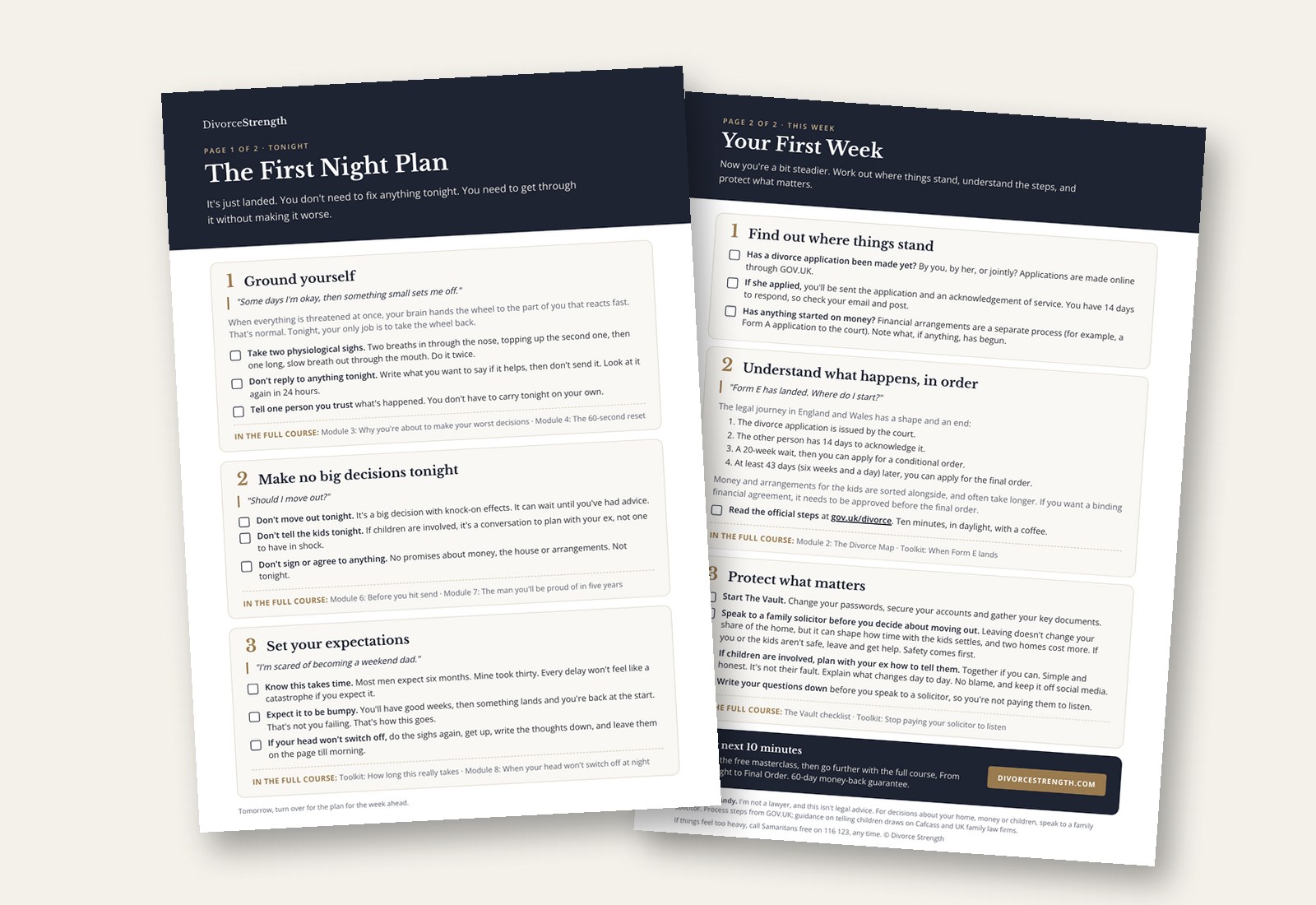
A free two-page plan for men going through divorce. Whether it's just happened or it's been going on for months. Written by a dad who's been through it.
Sent straight to your inbox, plus The Vault checklist the next day. No spam. Just Andy.