Divorce Entitlement: What You're Actually Owed in a UK Divorce
Sep 08, 2026
"What am I entitled to" was one of the first questions I asked, and it was the wrong question, asked far too early. Not because it isn't worth answering. Because I was asking it looking for a number, and there isn't one. Not a fixed one, anyway.
Entitlement Isn't a Percentage, It's a Test of Fairness
In England and Wales, entitlement in a divorce isn't calculated off a formula. A court looks at a specific list of factors and weighs them against each other. The length of the marriage. The income and earning capacity of both people, now and in the foreseeable future. The needs of any children. The standard of living during the marriage. The age of both parties. What each person contributed, and what each person will need going forward.
None of that produces a clean 50/50 in every case. Sometimes it lands close to equal. Sometimes it doesn't. What you're entitled to is whatever those factors add up to, applied to your specific marriage, not a rule of thumb from a forum thread or what happened to a mate's mate.
What Actually Counts as a Contribution
Here's the part that surprises a lot of men. Contribution isn't only what came in as salary. Running the home, raising the children, and enabling the other person's career all count as contributions in the eyes of the law, and they're weighed alongside financial ones, not beneath them.
This matters in both directions. If you were the primary earner, that doesn't automatically entitle you to keep the majority of what you earned. If you were the one who scaled back work to raise the kids, that time and effort has real weight in how a settlement gets decided. Understanding this early stops you from either overestimating or underestimating your position before any real conversation has happened.
The Difference Between Owed and Awarded
There's what you feel you're owed, and there's what a court will actually award. They aren't always the same thing, and the gap between them is where a lot of unnecessary conflict lives.
Feeling that you deserve more because of what you put into the marriage is a completely understandable feeling. It is not, on its own, a legal argument. The stronger position is knowing exactly which of your contributions and needs a court would actually weigh, and building your case around those, rather than around what feels fair from the inside.
Our post on divorce financial settlement in the UK goes into more detail on the 50/50 myth specifically, and how pensions in particular get missed in these conversations. If pensions are a significant part of your situation, our post on divorce entitlement to pension covers that specifically.
Divorce Entitlement: Quick Answers
Is a UK divorce settlement always split 50/50?
No. Courts start from fairness based on a range of factors, not an automatic equal split.
Does raising children count as a contribution to the marriage?
Yes. Non-financial contributions, including raising children and running the home, are weighed alongside financial ones.
What factors determine entitlement in a divorce?
The length of the marriage, both parties' income and earning capacity, the needs of any children, the standard of living during the marriage, and each person's age and contributions.
Can I lose everything I earned during the marriage?
Entitlement is based on fairness and need, not punishment. What you keep depends on the full picture of the marriage, not simply who earned what.
Get the Fuller Picture
Knowing what actually determines entitlement is the first step. Walking into those conversations with a clear head is the other half of it. The free Divorce Strength masterclass covers both, the practical foundations and the psychological ones, in ten minutes.
Know where you stand, and what to do next
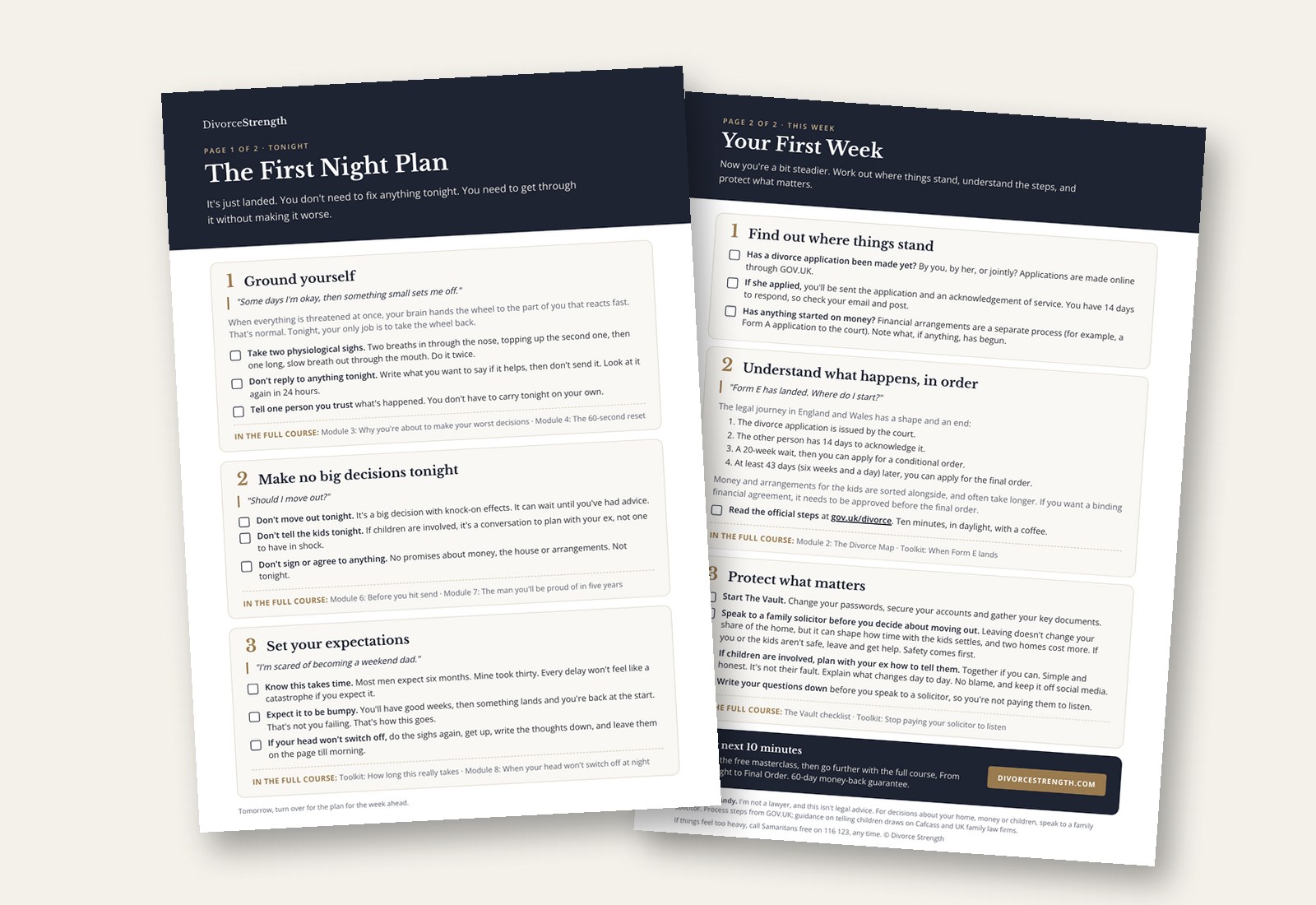
A free two-page plan for men going through divorce. Whether it's just happened or it's been going on for months. Written by a dad who's been through it.
Sent straight to your inbox, plus The Vault checklist the next day. No spam. Just Andy.