Divorce Settlements and Mental Illness in the UK: How It's Actually Treated
Sep 08, 2026
This search usually means one of two things. Either you're wondering how a mental health condition, yours or your ex's, might affect a financial settlement. Or you're the one struggling right now, and the process itself is what's doing the damage. Both are worth addressing properly, and they need different answers.
How Courts Actually Treat Mental Illness as a Factor
UK courts weigh a specific list of factors when deciding a financial settlement, including the needs of both parties, and health is one of the things that can affect those needs. A condition that limits someone's earning capacity, or increases their ongoing living or care costs, can be weighed as part of that person's needs, the same way age or caring responsibilities are.
This is genuinely case specific, and there's no general rule that produces a predictable outcome. If mental illness, yours or your ex's, is a real factor in your situation, this is exactly the kind of thing to raise directly and specifically with your solicitor, with proper medical evidence where relevant, rather than trying to work out in advance how much weight it will carry.
If Your Own Mental Health Is Being Affected By the Process
This is the angle that matters most to a lot of the men who land on this page, and it deserves to be said plainly. Divorce itself is genuinely hard on mental health, and struggling through it doesn't make you weak, and it doesn't make you a worse father or a worse case in the eyes of a court simply for being honest about it.
The research is clear that this period, especially the acute separation phase, carries real risk, including a significantly elevated suicide risk for men specifically. We've written about that directly in our post on the statistic every man going through divorce needs to hear, and about the wider experience of what men go through and why it so often stays hidden in our post on the divorce man nobody talks about. If either of those describes where you are right now, please read them, and please know that support exists and reaching for it is the strong move, not the weak one.
Getting the Right Kind of Help Alongside the Right Legal Advice
Your solicitor is there for the legal side, not the emotional one. Keep them for legal questions, and get real support for the rest, whether that's a GP, a counsellor, or a structured framework built for exactly this situation. Our post on whether you need divorce counselling is worth reading if you're not sure where to start.
Divorce Settlements and Mental Illness UK: Quick Answers
Does mental illness affect a divorce financial settlement in the UK?
It can be weighed as part of a person's needs, particularly where it affects earning capacity or ongoing costs, but it's genuinely case specific and worth raising directly with a solicitor with proper evidence.
Will struggling with my mental health during divorce be used against me?
Being honest about struggling doesn't make you a worse case or a worse father. If you have specific concerns about how it might be perceived, raise them directly with your solicitor.
Is it normal for divorce to affect mental health this much?
Yes. The research consistently shows this is one of the highest-risk periods for men's mental health, which is exactly why getting real support matters.
Where should I go for support with my mental health during divorce?
Your GP, a qualified counsellor, or a structured framework built specifically for divorce are all worth considering, often alongside each other rather than instead of one another.
If you are struggling and need immediate support, please contact the Samaritans on 116 123 or visit samaritans.org. You can also contact CALM (Campaign Against Living Miserably) on 0800 58 58 58, available 5pm to midnight every day.
You Don't Have to Carry This Alone
The free Divorce Strength masterclass was built specifically for the mental and emotional weight of this process, not just the legal and financial side of it.
Know where you stand, and what to do next
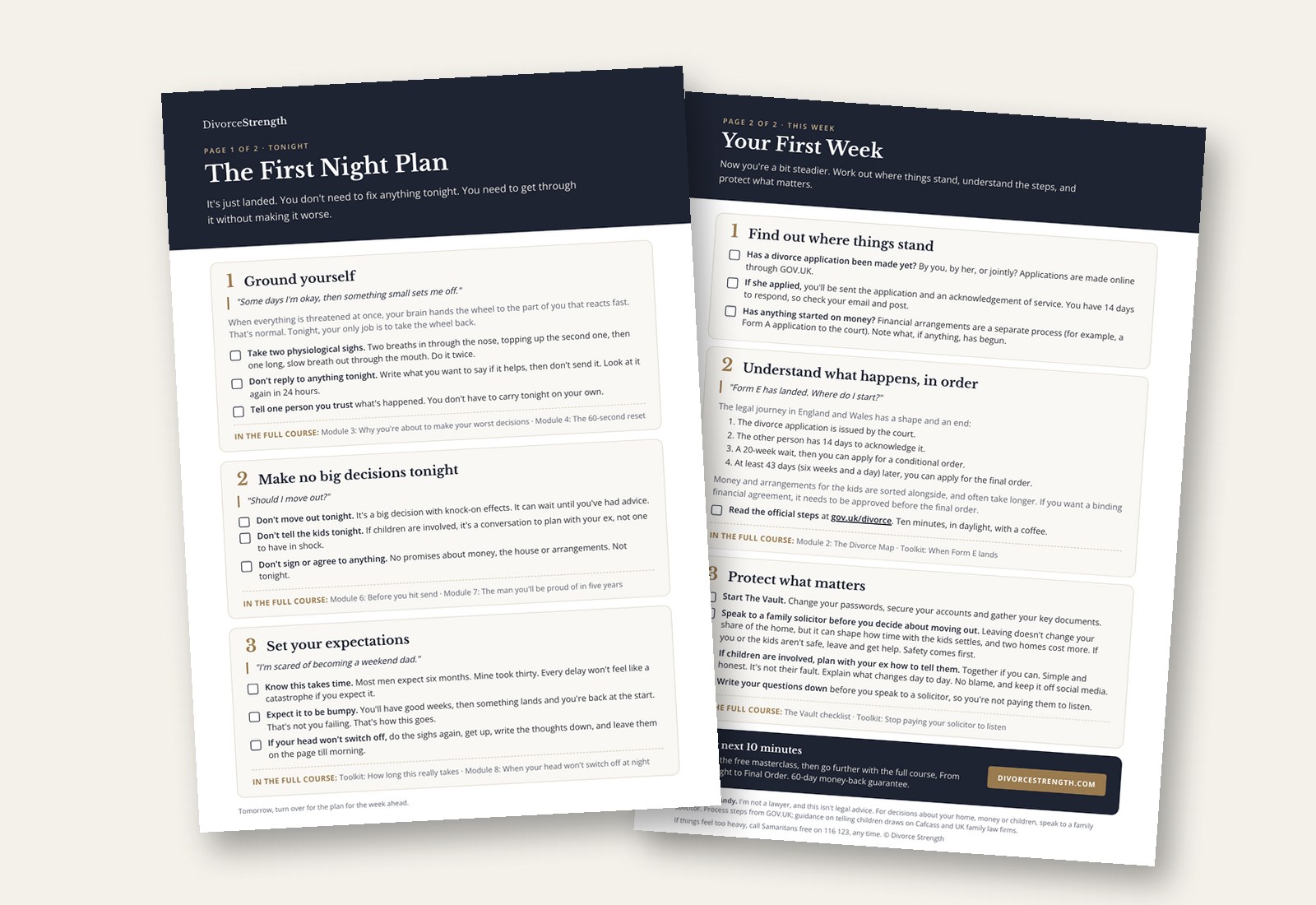
A free two-page plan for men going through divorce. Whether it's just happened or it's been going on for months. Written by a dad who's been through it.
Sent straight to your inbox, plus The Vault checklist the next day. No spam. Just Andy.