Divorce Counselling: Do You Actually Need It, and What Does It Actually Help With
Sep 08, 2026
I spent a lot of my divorce treating my solicitor like a therapist, calling to process how I felt rather than to ask a legal question. It cost money and it didn't actually help, because that isn't what a solicitor is for. What I needed, and didn't get for a long time, was somewhere else to put that weight. Counselling is one real answer to that.
What Counselling Actually Helps With
Divorce isn't only a legal and financial event. It's a genuine loss, of a relationship, an identity, a version of your future you'd been picturing. Counselling gives you a structured, private space to actually process that, rather than carrying it silently or offloading it onto whoever happens to be nearby, a solicitor, a mate, your kids without meaning to.
It's particularly worth considering if you notice the same thoughts circling without resolution, if your sleep or your mood is being affected for weeks at a time, or if you're finding it hard to separate your feelings about the marriage from the decisions you're making about it right now.
Counselling vs Coaching vs a Course vs a Support Group
These aren't the same thing, and it's worth knowing the difference before you pick one. Counselling works with the emotional and psychological processing itself, often one to one, often over a period of months. A divorce coach tends to be more practically focused, helping you navigate specific decisions and next steps. A structured course gives you a framework and tools you can apply yourself, on your own timeline. A support group gives you connection with other men going through the same thing.
Our posts on whether you need a divorce coach and divorce support groups near me go into more detail on those two specifically. None of them are mutually exclusive. Plenty of men use more than one at once, and there's no reason not to.
Why Men Often Wait Too Long to Get It
The expectation that men should hold it together quietly is exactly what keeps a lot of men from getting counselling until they're already struggling badly. Our post on why asking for help is a strength, not a weakness covers this pattern in more depth. The men who come through divorce in the best shape tend to be the ones who got support early, not the ones who waited until they had no other option left.
Divorce Counselling: Quick Answers
Is divorce counselling worth it?
For most people going through a major loss like this, yes. It gives you a dedicated, private space to process what's happening rather than carrying it alone or offloading it elsewhere.
What's the difference between divorce counselling and a divorce coach?
Counselling focuses on emotional and psychological processing. Coaching tends to be more practical, helping you navigate specific decisions and next steps.
Can I use counselling alongside a course or support group?
Yes. They serve different purposes, and many men use more than one at the same time.
How do I know if I need counselling during divorce?
Signs worth paying attention to include circling thoughts that don't resolve, sleep or mood affected for weeks at a time, or struggling to separate your feelings about the marriage from the decisions you're making.
A Starting Point If You're Not Sure Where to Begin
If you're not ready to commit to counselling yet, or you want a framework you can start using immediately, the free Divorce Strength masterclass is a good place to begin.
Know where you stand, and what to do next
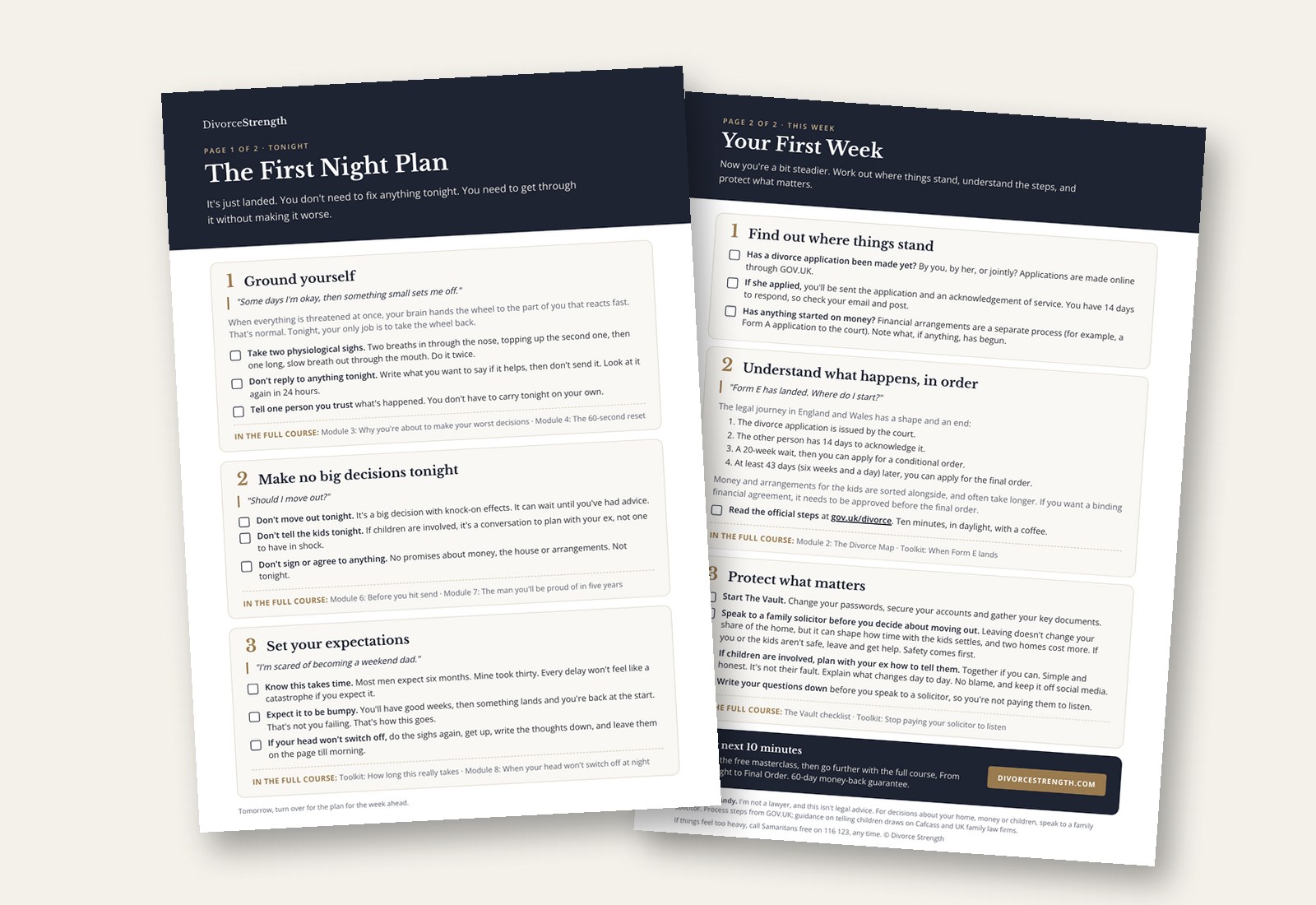
A free two-page plan for men going through divorce. Whether it's just happened or it's been going on for months. Written by a dad who's been through it.
Sent straight to your inbox, plus The Vault checklist the next day. No spam. Just Andy.