Divorce 70/30 Asset Split: What It Actually Means and How to Handle Hearing It
Sep 08, 2026
When my solicitor told me the settlement was likely to land around 70/30 against me, I felt the floor fall away. For a moment, the most permanent decision imaginable started to feel like the only way out. I want to be straight about that, because if you've just heard a number like this yourself, I don't want to pretend it's just a maths problem. It isn't. It lands as a gut punch first and a negotiating position second.
Why Splits Aren't Always Equal
A skewed split isn't a punishment, and it isn't usually arbitrary. It reflects the same factors that decide any UK financial settlement, the length of the marriage, each person's income and earning capacity, the needs of any children, and who's likely to be the primary carer going forward. We cover this in full in our post on what you're actually owed in a UK divorce.
A 70/30 split most often shows up where one person will be the main carer for young children, or where there's a significant income gap that needs bridging so both households can function. It isn't a verdict on who was the better spouse. It's an attempt to get both people, and especially the children, to a workable place.
What This Number Actually Costs You If You React to It
The instinct, when a number like this lands, is to fight it immediately and hard. Sometimes that's the right call, if the number genuinely doesn't reflect a fair reading of the factors above. But reacting from the initial gut punch rather than from a clear read of your actual position is how men end up spending months and thousands of pounds contesting something that was closer to fair than it first felt.
Before you decide how to respond, get an honest picture of the numbers involved, not the feeling attached to them. What does 30 percent actually look like in pounds. What does your life on the other side of it actually cost to run.
Finding Your Real Floor
Here's a piece of my own journal from July 2023, months before I had a name for any of this: "Even if I get 40 percent, that is still plenty to live life on my terms." I hadn't found a settlement number yet. I'd found my floor, the amount I genuinely needed to live an okay life, not the amount I was used to.
That distinction changes the whole conversation. The question stops being how do I survive this, and becomes how do I improve on the worst realistic case. Work out your genuine monthly minimum, rent, bills, seeing your kids, the actual floor rather than the lifestyle you're used to. Once you know that number, a settlement that sits below what you hoped for stops feeling like the end of everything, because you already know you can build a real life from it.
Divorce 70/30 Asset Split: Quick Answers
Does a 70/30 split mean I did something wrong?
No. Skewed splits usually reflect who'll be the primary carer or an income gap that needs bridging, not fault.
Can a 70/30 split be challenged?
Yes, if it doesn't genuinely reflect the length of the marriage, both parties' needs, and earning capacity. It's worth getting proper legal advice before contesting it, not reacting on instinct alone.
How do I know if a split is actually fair?
Work out your real financial floor first, what you genuinely need to live on, not what you're used to. Then judge the offer against that number rather than against the fear of losing more than half.
What's the biggest mistake men make when they hear a skewed number?
Reacting from the initial shock rather than getting a clear, honest picture of what the number actually means in practice.
Where to Go From Here
Hearing a number like this is exactly the moment your state of mind matters most. The free Divorce Strength masterclass covers how to get your thinking clear before you respond to anything that's landed hard, so the decision you make is the right one, not just the fastest one.
Know where you stand, and what to do next
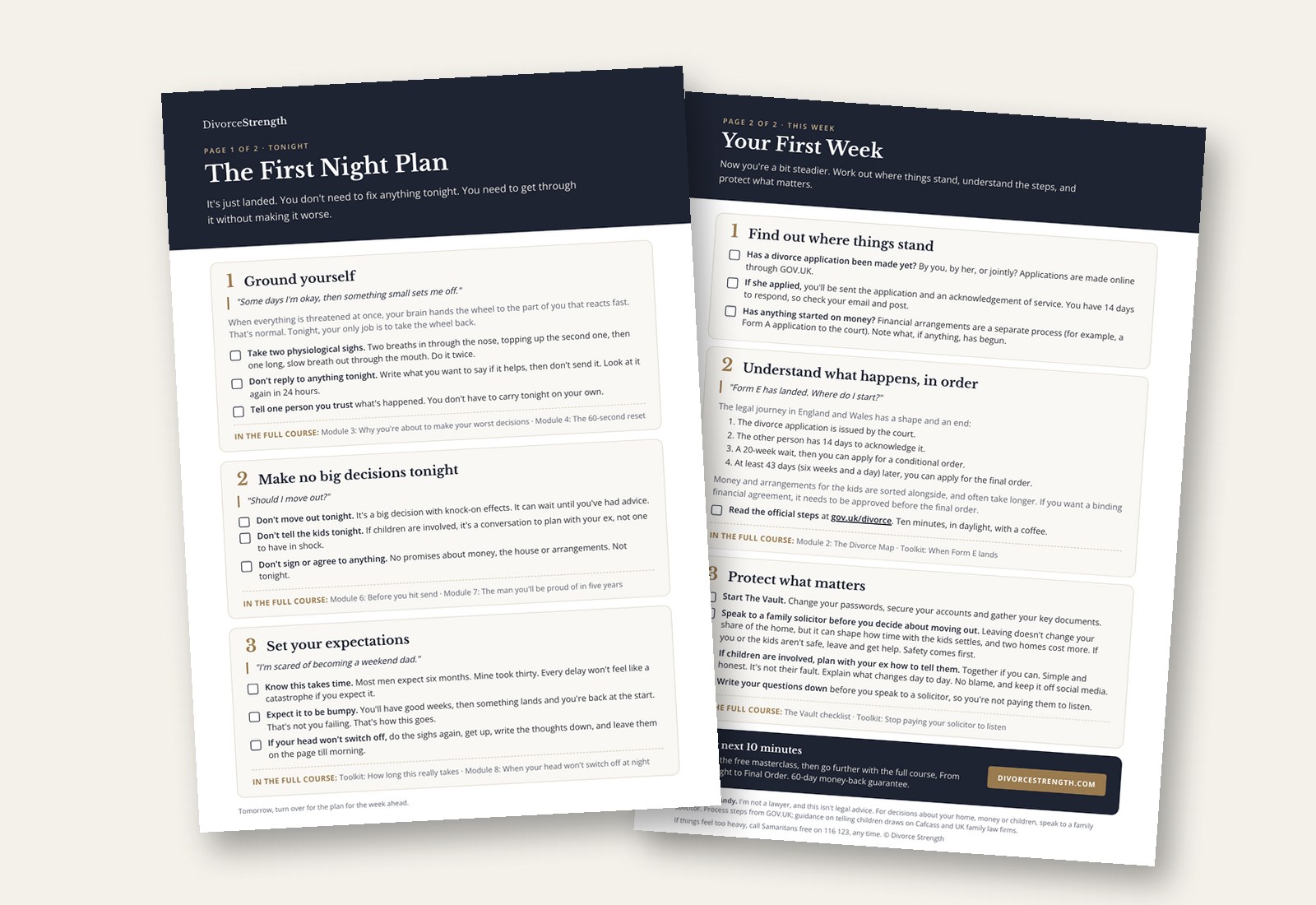
A free two-page plan for men going through divorce. Whether it's just happened or it's been going on for months. Written by a dad who's been through it.
Sent straight to your inbox, plus The Vault checklist the next day. No spam. Just Andy.